Rent-to-Own vs. Traditional Mortgage in Houston: Which Home Financing Option Fits Your Needs?

Navigating the Houston housing market in 2026 feels a bit like trying to merge onto I-45 during a Friday afternoon downpour, it’s fast, a little chaotic, and everyone seems to be in a rush. If you’re looking to plant roots in the Bayou City, you’ve likely realized that the path to homeownership isn’t one-size-fits-all. While the traditional mortgage remains the “gold standard,” rent-to-own agreements have surged in popularity as a flexible alternative for those who aren’t quite “bank-ready” today but want to secure their piece of Texas tomorrow.

Whether you’re eyeing a suburban spread in Katy or a sleek loft near Buffalo Bayou, choosing between a rent-to-own contract and a traditional mortgage is one of the biggest financial decisions you’ll make. In this guide, we’re going to break down the mechanics, the math, and the local market trends to help you decide which path leads to your front door.

The Big Picture: Rent-to-Own vs. Traditional Mortgage
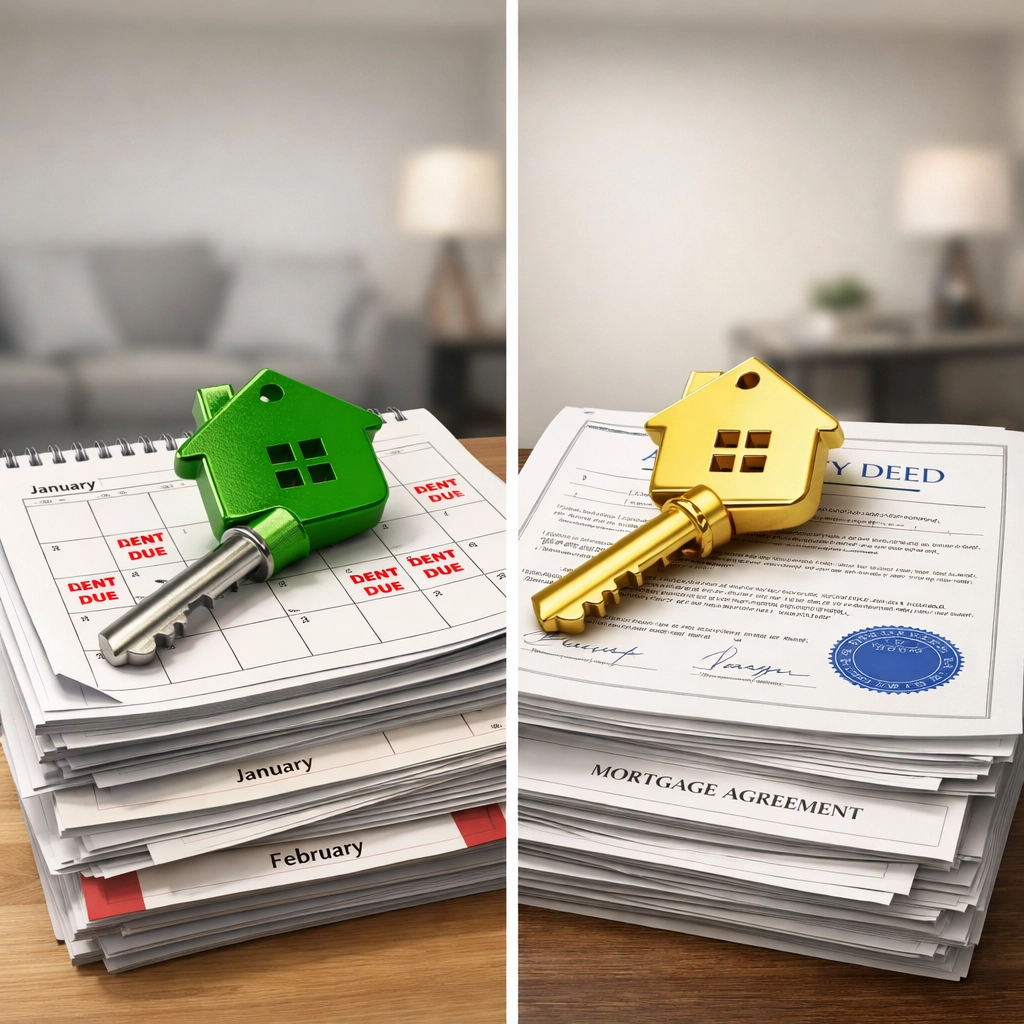
At its core, the difference between these two options is about timing and ownership.

With a traditional mortgage, you buy the home upfront. You work with a lender, provide a down payment, and at the closing table, the deed is transferred to your name. You are the homeowner from Day 1.

With a rent-to-own agreement, you’re essentially “test-driving” the home. You sign a contract that allows you to rent the property for a set period (usually 1–3 years) with the option, or in some cases, the obligation, to buy it at the end of the term. You build a relationship with the home before you ever sign the final mortgage papers.

Understanding the Mechanics of Rent-to-Own in Houston

Rent-to-own isn’t just a standard lease with a “maybe” attached to it. It’s a structured legal agreement that typically consists of two main components: a standard lease agreement and an option to purchase.

1. The Option Fee

Unlike a traditional security deposit, most rent-to-own contracts require an upfront “option fee.” This is typically between 1% and 5% of the home’s purchase price. While this fee is usually non-refundable if you decide not to buy, most reputable Houston sellers will apply this full amount toward your eventual down payment.

2. Rent Credits

This is where the “equity building” happens. In a rent-to-own scenario, your monthly payment is often slightly higher than the local market rent. Why? Because a portion of that payment, called a “rent credit”, is set aside to be applied to the purchase price later. It’s essentially a forced savings plan that helps you build a “down payment” while you live in the house.

3. Price Locking

One of the most significant advantages in a rising market like Houston’s is the ability to lock in a purchase price today for a sale that happens two years from now. If the market continues to appreciate, you could walk into your closing with instant equity. For a deeper look at the current buying climate, check out our 2026 Houston First-Time Home Buyer Guide.

The Traditional Mortgage Process: What You Need to Know

While rent-to-own offers flexibility, the traditional mortgage is often more cost-effective in the long run for those who qualify. However, the barrier to entry is higher.

Credit Score Requirements

In 2026, most conventional lenders are looking for a credit score of at least 620. However, to snag the best interest rates, especially as we navigate what many call The 6.4% Psychological Barrier, you’ll ideally want a score of 720 or higher.

The Documentation Heavy-Lift

Lenders want to see your life story in numbers. You’ll need:

  • Two years of tax returns.
  • Recent W-2s or 1099s.
  • Bank statements for the last 60–90 days.
  • Proof of a steady income stream.

The Down Payment

While the “20% down” rule is largely a myth, you will still need a chunk of change. FHA loans allow for as little as 3.5% down, and some conventional programs offer 3% for first-time buyers. For a $400,000 home in Cypress, that’s still $12,000 to $14,000 upfront, plus closing costs.

Comparing the Costs: A Side-by-Side Look

The Pros and Cons: Which One Wins?

Why Rent-to-Own Might Fit Your Needs

Rent-to-own is a powerhouse strategy for specific situations. If you are self-employed and your tax returns don’t yet show your true income, or if you’ve had a “hiccup” in your credit score that needs a year of repair, this option keeps you from being locked out of the market. It allows you to move into the neighborhood you want, perhaps near the top-tier schools in Katy ISD, while you get your financial house in order.

The Risk: If you don’t buy the home at the end of the lease, you usually lose your option fee and all the rent credits you’ve accumulated. It is a “use it or lose it” investment.

Why a Traditional Mortgage Might Fit Your Needs

If you have the credit and the cash, a traditional mortgage is almost always the better financial move. Your monthly payments are generally lower, and you start reaping the tax benefits of homeownership (like mortgage interest deductions) immediately. You also have full control over the property from the start, no asking a landlord for permission to paint the kitchen.

The Risk: You are fully responsible for all repairs and the risk of market downturns. According to the Consumer Financial Protection Bureau, understanding the total cost of ownership is the most critical step before signing a mortgage.

Neighborhood Trends: Where to Look in Houston

In 2026, we are seeing a trend where certain neighborhoods are more “rent-to-own friendly” than others. Areas with high new construction volume, like Cypress, often have programs available through builders or investors.

Conversely, in high-demand urban areas like Downtown Houston, traditional mortgages are the norm because properties move so quickly that sellers rarely feel the need to offer rent-to-own terms.

Factors to Consider Before You Decide

  • Your Credit Timeline: Can you fix your credit in 12 months? If so, rent-to-own is a viable bridge.
  • Cash on Hand: Do you have 3–5% for a down payment now? If yes, talk to a lender about a mortgage first.
  • Market Trajectory: Do you believe Houston home prices will be higher in two years? Price locking in a rent-to-own contract can be a huge win.
  • Stability: Are you sure you want to be in this specific house for 5+ years? Rent-to-own is a heavy commitment to a single property.

How Bexley Realty Group Can Help

At Bexley Realty Group, we don’t just list houses; we solve puzzles. We know that the Houston market is complex, and the “right” choice depends entirely on your personal balance sheet. Our team can help you evaluate rent-to-own contracts to ensure they are fair and protect your interests, or connect you with local lenders who specialize in getting “close-but-not-quite” buyers over the finish line.

Summary: Making Your Move

Deciding between rent-to-own and a traditional mortgage comes down to your current readiness versus your future goals.

  • Choose Rent-to-Own if you need time to save or repair credit but want to lock in a home in a specific neighborhood today.
  • Choose a Traditional Mortgage if you have a stable income and a 620+ credit score, as it offers the lowest long-term cost and immediate ownership.

Regardless of which path you choose, the Houston market moves fast. Don’t let indecision keep you on the sidelines.

Ready to explore your options? Whether you’re looking for a rent-to-own opportunity or ready to get pre-approved for a traditional mortgage, we’re here to help.

Visit us at BexleyRealtyGroup.comor call us today at 832-648-2492 to speak with a local expert.

#HoustonRealEstate #RentToOwnHouston #HoustonMortgage #HomeBuying2026 #BexleyRealtyGroup #TexasRealEstate #FirstTimeHomeBuyer