
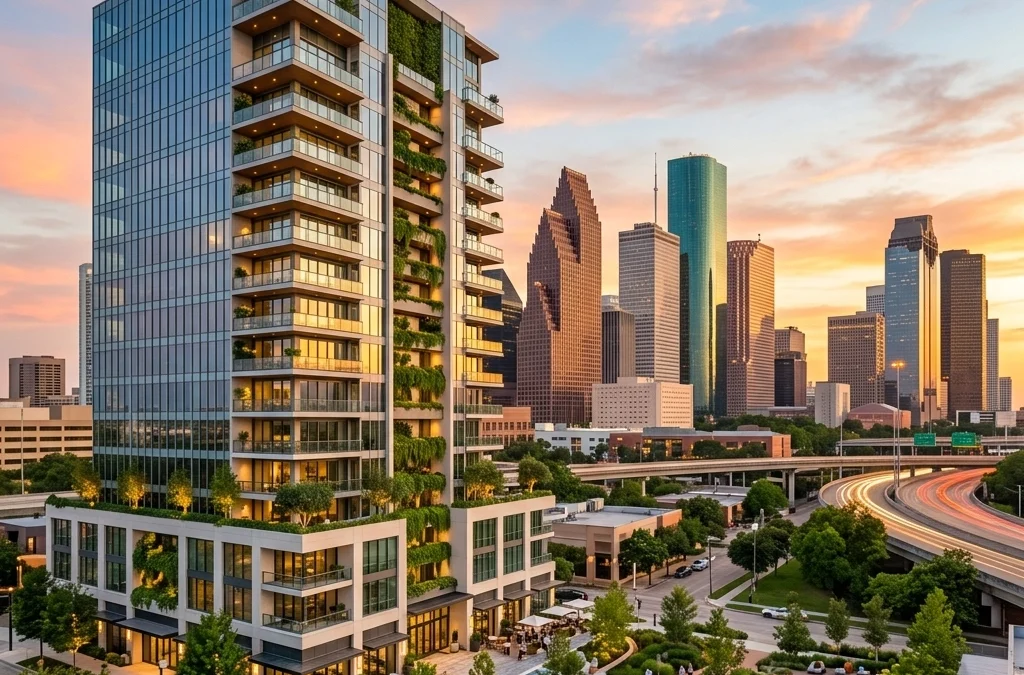
Commercial-to-Residential Conversions Revitalize Houston’s Inner Loop
For decades, the Houston skyline was a symbol of corporate might. The gleaming glass towers of Downtown and the bustling corridors of the Inner Loop were where deals were struck and the “9-to-5” reigned supreme. But walk through Downtown or Midtown today, and you’ll notice a shift in the energy. The silhouette of the city remains, but the life inside those buildings is changing.
The rise of hybrid work has left millions of square feet of office space underutilized. Instead of letting these structures sit silent, innovative developers are reimagining them as “urban oases”: transforming cold, cubicle-filled floors into luxury lofts, high-end rentals, and vibrant mixed-use communities. At Bexley Realty Group, we’re seeing firsthand how this “Office to Oasis” trend is creating unique housing opportunities in some of the city’s most sought-after ZIP codes.
The Catalyst: Why the “9-to-5” Left the Building
The shift didn’t happen overnight, but the pandemic certainly hit the accelerator. As companies moved toward permanent hybrid or remote work models, the need for massive, centralized office footprints dwindled. In Houston, a city known for its sprawling suburbs, this created a surplus of commercial real estate right in the heart of the city.
However, where some saw “vacancy,” others saw “vibrancy.” By converting these older office buildings into residential spaces, the city is solving two problems at once: revitalizing the commercial sector and addressing the constant demand for housing within the Inner Loop. While inventory continues to bloom across the Greater Houston area, these unique conversions offer something suburban new builds can’t: character, history, and an unbeatable location.

Downtown’s Residential Renaissance
Downtown Houston is the epicenter of this transformation. Organizations like Downtown Houston+ and initiatives like the “Living in Downtown” incentive program have paved the way for a more residential-friendly core. The goal is simple: create a 24/7 neighborhood. When people live where they work (or used to work), the ground-floor economy thrives.
We are seeing a trend where the ground floor of these converted buildings is dedicated to upscale retail, cafes, and boutique fitness studios, while the floors above are carved into luxury apartments or condos. This mixed-use model ensures that the streets stay active long after the traditional workday ends. This is a far cry from the Downtown of twenty years ago, which often felt like a ghost town after 6:00 PM.
The Allure of the Industrial Loft
What makes these conversions so popular? For many buyers and renters, it’s all about the “cool factor.” Modern office buildings often feature high ceilings, massive windows, and open floor plans: the perfect bones for industrial-style lofts.
When a 1970s office block is gutted and turned into residential units, you get architectural features that are hard to find in standard apartment complexes:
- Expansive Windows: Floor-to-ceiling glass that offers panoramic views of the Houston skyline.
- Concrete and Steel: Exposed structural elements that provide a sleek, modern aesthetic.
- High Tech: Since these were once commercial buildings, they often boast superior fiber-optic connectivity and robust HVAC systems.
These properties are particularly attractive to young professionals and empty nesters who want to be close to the theater district, Minute Maid Park, and the city’s best dining. It’s a lifestyle shift that emphasizes walkability over commuting.

Midtown and the Inner Loop: Beyond the Skyscrapers
While Downtown gets a lot of the spotlight, the conversion trend is bubbling up in Midtown and the surrounding Inner Loop areas as well. Developers like Braun Enterprises have been instrumental in this “adaptive reuse” movement. Instead of tearing down older structures, they are repositioning them to fit the modern Houstonian’s lifestyle.
Projects like the redevelopment of 1919 Washington Ave show how historic or older commercial anchors can be revitalized. By bringing in popular concepts like Julep or local retail favorites, these developments become neighborhood hubs. For those looking at the investment side, these areas are gold mines. We’ve seen that consumers are sending rentals of single-family homes into record territory, but the demand for high-end urban rentals is equally fierce.

Why This Matters for the Houston Housing Market
You might wonder how a few converted office buildings affect the broader market. The answer lies in diversity of choice. For a long time, moving to the Inner Loop meant choosing between a high-priced bungalow or a standard mid-rise apartment. These commercial conversions introduce a “third way”: luxury, space-efficient, and architecturally significant housing that keeps the city core competitive.
Furthermore, these projects help stabilize property values in the surrounding areas. A thriving, lived-in Downtown makes the entire Inner Loop more desirable. Whether you are a first-time buyer or looking to diversify your portfolio, keeping an eye on these developments is key. The Houston housing market remains steady, and these innovative projects are a big reason why.
Challenges and the Future of Conversions
Converting an office building isn’t as simple as swapping desks for beds. The plumbing and electrical requirements for a residential building are vastly different from a commercial one. Every apartment needs a kitchen and a bathroom, which means significant infrastructure overhauls.
However, as construction technology improves and the city continues to offer incentives for urban density, we expect to see even more of these projects “topping out” in the coming years. The future of Houston isn’t just about building outward into the suburbs; it’s about building up and in.

Summary and Key Takeaways
The transformation of Houston’s Inner Loop from a commercial hub to a residential oasis is one of the most exciting developments in our local real estate market.
- Hybrid work has created a surplus of office space that is being creatively repurposed.
- Downtown and Midtown are leading the way with luxury lofts and mixed-use developments.
- Adaptive reuse preserves the city’s architectural history while providing modern, walkable living spaces.
- Investment opportunities are growing as more people choose urban density over suburban sprawl.
If you’ve been dreaming of a home with a skyline view and a bit of industrial soul, there has never been a better time to explore the Inner Loop.
Ready to find your urban oasis?
At Bexley Realty Group, we specialize in helping our clients navigate the unique opportunities of the Houston market. Whether you’re looking for a luxury loft Downtown or a home in the suburbs, we’ve got you covered.
Contact us today:📞 Call: 832-648-2492🌐 Visit: BexleyRealtyGroup.com
#HoustonRealEstate #InnerLoopHouston #UrbanLiving #HoustonLofts #BexleyRealtyGroup #DowntownHouston #RealEstateTrends2026 #AdaptiveReuse