
10 Things You Should Know About the New FEMA Flood Maps (2026 Update)
If you live in the greater Houston area, you know that “flood risk” isn’t just a buzzword: it’s a part of our daily reality. But in 2026, that reality is shifting beneath our feet. For the first time in nearly two decades, Harris County is undergoing a massive overhaul of its flood maps through the MAAPnext (Modeling, Assessment, and Awareness Project) initiative.
These aren’t just minor tweaks to a few lines on a chart. We are looking at a fundamental change in how flood risk is measured, communicated, and regulated across the Houston metropolitan area. Whether you are a homeowner in Katy, a seller in Sugar Land, or looking for new construction in The Woodlands, these maps will impact your property value and your monthly expenses.
Here are the 10 most critical things you need to know about the 2026 FEMA flood map updates.
1. 175,000+ Units are Entering the Floodplain
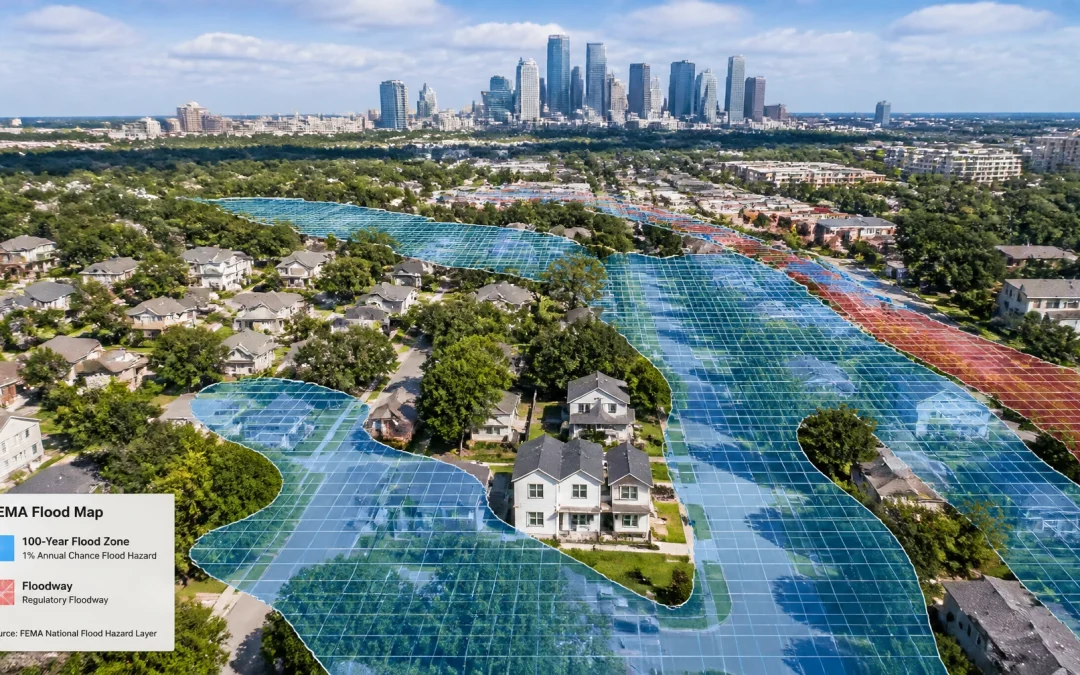
The most striking figure from the draft maps is the sheer scale of the expansion. Preliminary data suggests that approximately 175,000 additional housing units in Harris County will be moved into the 100-year floodplain (the 1% annual chance flood zone).
To put that in perspective, the number of properties in the high-risk zone is expected to nearly double. Many homeowners who have never been required to carry flood insurance: and whose homes stayed dry during Harvey: may find themselves officially labeled “high risk” for the first time.
2. A Massive 31% Increase in Floodplain Area
The new modeling hasn’t just added properties; it has expanded the boundaries of what we consider a risk zone. The total mapped floodplain area in Harris County is projected to grow by roughly 31%, expanding the high-risk footprint by approximately 200 square miles.
This expansion reflects a more detailed understanding of how water moves through our local bayous and street-level drainage systems. Areas that were once considered “Zone X” (low to moderate risk) are being reclassified as “Zone AE” (high risk).
3. Why the Change? The “Atlas 14” Factor
Why is this happening now? The primary driver is Atlas 14, a federal study that updated rainfall data for Texas. The old maps were based on outdated rainfall estimates that didn’t fully account for the intensity of modern storms.
Under the new data, what we used to call a “100-year storm” (one that has a 1% chance of happening in any given year) now requires significantly more rainfall. In short, the “bar” for what constitutes a flood risk has been raised because our storms have become more frequent and more intense.
4. The Timeline: When Do These Maps Become “Official”?
It is important to note that as of mid-2026, these maps are still in the draft and appeal stage.
- Early 2026: Draft maps released for public comment.
- Late 2026: Formal FEMA appeal and comment period (typically 90 days).
- 2027–2028: Final adoption and the “Letter of Final Determination.”
While the maps aren’t being used for insurance rating today, they are already influencing the Houston math for buyers and sellers. If you are planning to sell soon, it is vital to know where your home stands in the draft.
5. Mandatory Insurance for Mortgages
The moment these maps become “effective” (likely in 2027 or 2028), the legal requirements change. If your home is moved into a Special Flood Hazard Area (SFHA) and you have a federally backed mortgage (FHA, VA, or conventional), your lender will be legally required to mandate flood insurance.
For many Houstonians, this will add a new, non-negotiable monthly expense to their escrow account. Transitioning into the floodplain without a plan could lead to a sudden “forced-placed” insurance policy from your lender, which is often significantly more expensive than a policy you find yourself.
6. Risk Rating 2.0 vs. The Maps
There is a common misconception that “moving into the floodplain” automatically triples your insurance premium. While that used to be closer to the truth, FEMA’s Risk Rating 2.0 has changed the game.
Today, insurance premiums are calculated based on property-specific factors like:
- Distance to the water source.
- The elevation of the first floor.
- The replacement cost of the home.
The map change triggers the requirement to have insurance, but your specific rate will depend more on your home’s unique characteristics than just the line on the map. However, being in the zone does eliminate some lower-cost “Preferred Risk” options that were previously available.

7. Impact on Property Values and Disclosures
In Texas, flood disclosure is a critical part of the real estate process. As these draft maps become public knowledge, savvy buyers are already checking them.
If your home is in a draft expansion zone, it may not affect your current value today, but it will be a major talking point during negotiations. Buyers may ask for credits to cover the first few years of insurance, or they may look for homes that remain in the lower-risk “Zone X.” At Bexley Realty Group, we help our clients protect their equity by navigating these disclosures transparently.
8. The “500-Year” Zone is the New “100-Year” Zone
One of the easiest ways to understand the 2026 update is to look at the old 500-year floodplain. In many parts of Harris County, the new 100-year floodplain looks remarkably similar to what the 500-year floodplain used to be.
This shift acknowledges that the “extreme” events of the past are becoming the “expected” events of the future. If you were previously in the 500-year zone, you should prepare for the high probability that you are now in the 100-year zone.
9. How to Check Your Property Right Now
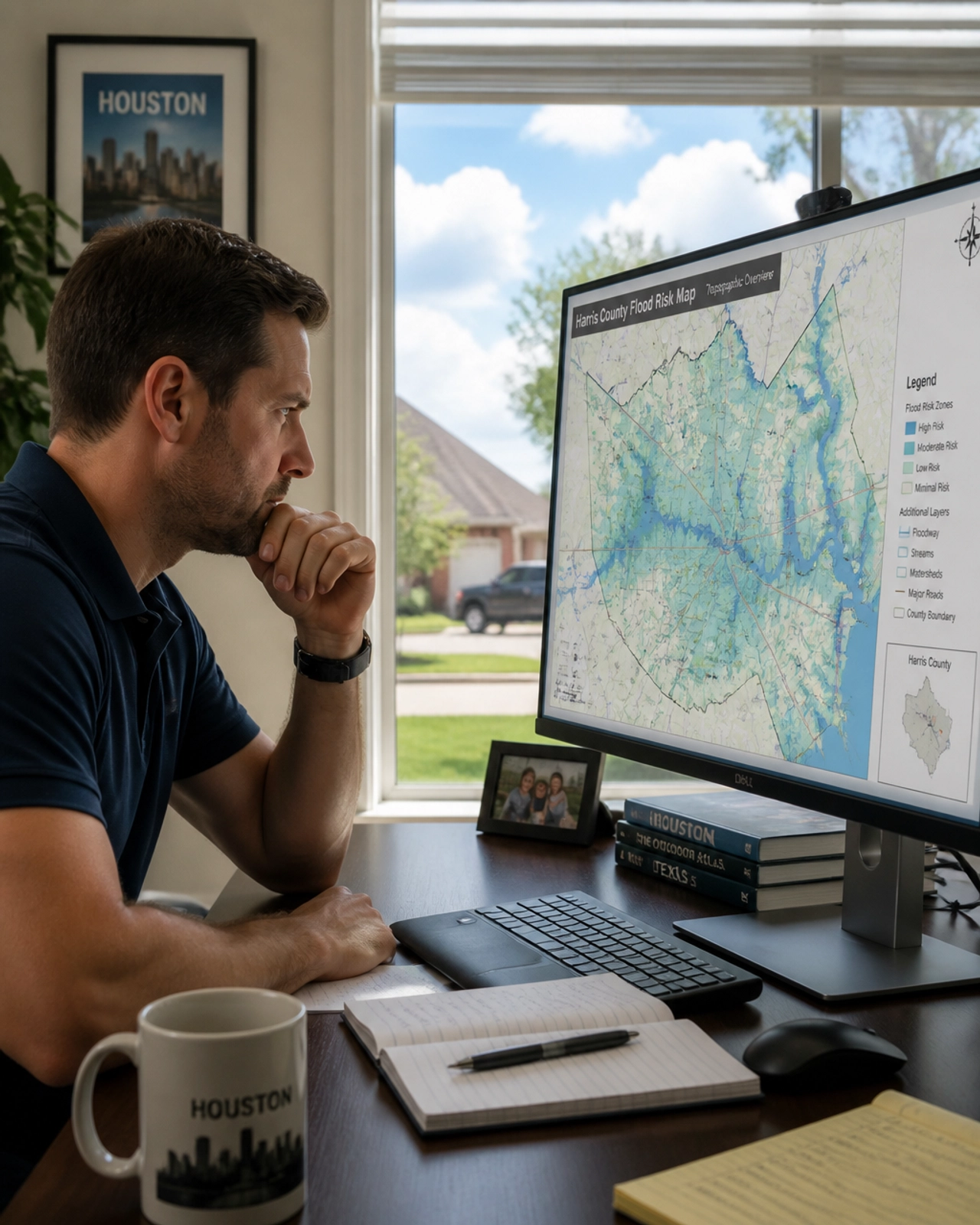
Don’t wait for a letter from your mortgage company. You can check the status of your specific address today using the MAAPnext Navigator.
By visiting the Harris County Flood Control District’s MAAPnext website, you can toggle between the “Current Effective” maps and the “Draft” maps. This tool is the best way to see exactly how the 200-square-mile expansion affects your neighborhood.
10. The “Buy Early” Strategy (Grandfathering)
The smartest move a homeowner can make in 2026 is to secure a flood insurance policy before the maps go final.
Under NFIP (National Flood Insurance Program) rules, properties that are “newly mapped” into a high-risk zone can often take advantage of lower introductory rates. By carrying a policy now, you can “lock in” your status and potentially benefit from the 18% annual cap on premium increases, preventing a massive price jump once the maps become official.
Summary & Takeaway
The 2026 FEMA flood map update is the most significant regulatory shift in Houston real estate since the aftermath of Hurricane Harvey. With 175,000 more units entering the floodplain and a 31% increase in high-risk areas, the impact is unavoidable.
Key Takeaways:
- Check your property on the MAAPnext Navigator immediately.
- Understand that map changes trigger insurance requirements, even if they don’t immediately spike your rates.
- If you’re planning to buy or sell, factor these map drafts into your decision-making process.
Whether you’re looking to sell for full value before the maps go final or you’re trying to find a high-and-dry home for your family, we’re here to help you navigate the data.
Need help understanding how the new maps affect your home’s value?Visit BexleyRealtyGroup.com or call us today at 832-648-2492. We’ll help you make your next move with confidence.
#HoustonRealEstate #FEMA #FloodMaps2026 #HarrisCounty #MAAPnext #HoustonHomeowners #RealEstateTips #BexleyRealtyGroup