

Finding a home you like is exciting. But before deciding what you can comfortably afford, there’s one mistake buyers should avoid:
Focusing only on the asking price.
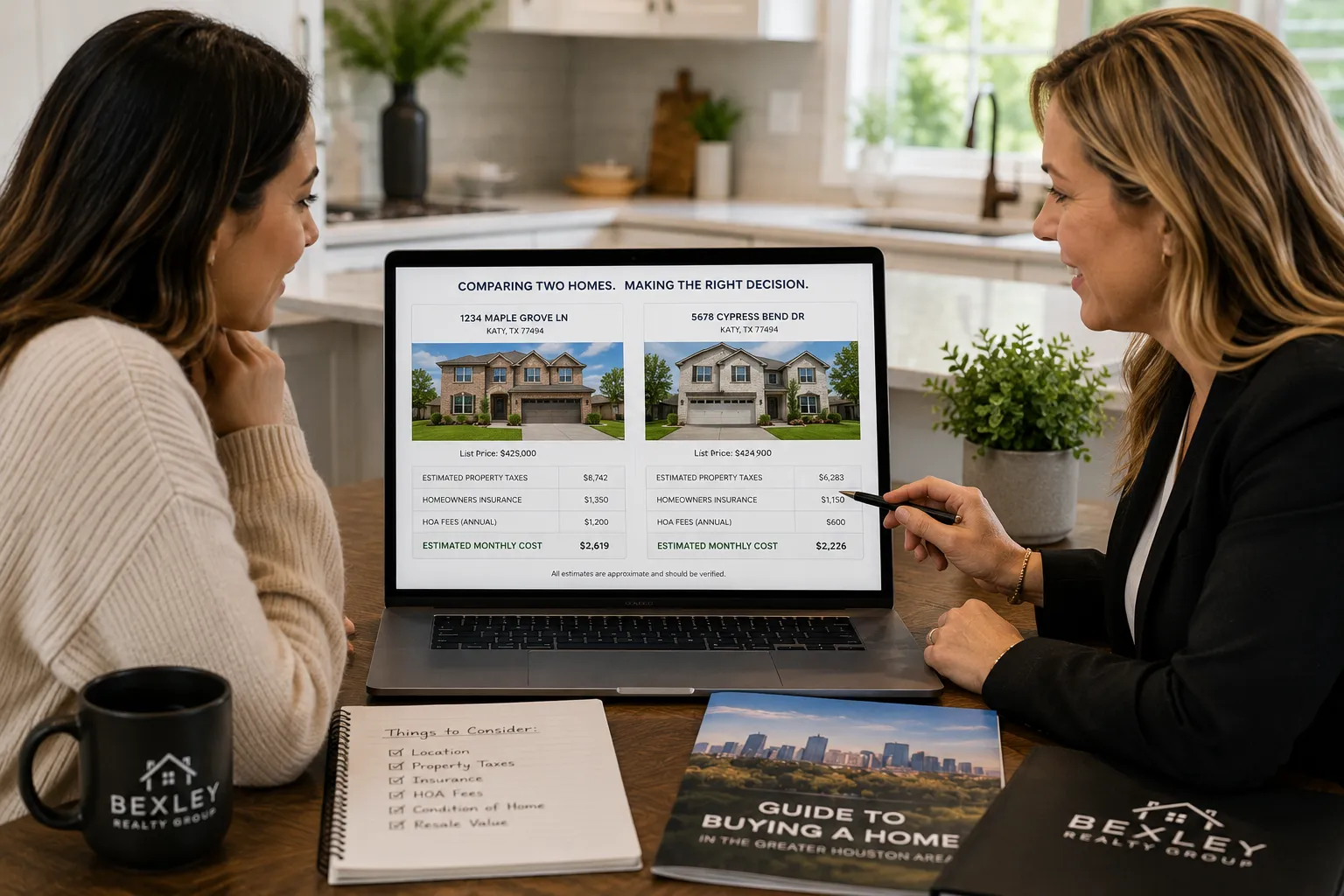
Two Houston-area homes with the same $400,000 price tag can have noticeably different monthly costs.
Property taxes, insurance, HOA fees, interest rates and even the condition of the home can change the financial picture.
Here are seven numbers buyers should understand before making an offer.
1. Your Estimated Monthly Payment
Start with the complete payment—not simply principal and interest.
Depending on the property and financing, your monthly housing expense may include:
Mortgage principal and interest, property taxes, homeowners insurance, mortgage insurance and HOA-related costs.
That total gives you a much better picture of affordability.
2. Property Taxes
This one matters in Texas.
Two similarly priced homes can have substantially different property tax obligations depending on location, taxing jurisdictions, exemptions and other factors.
Before getting serious about a property, understand the estimated tax expense rather than assuming every $400,000 home will carry similar costs.
3. Homeowners Insurance
Insurance should be investigated early in the process—not days before closing.
The property’s age, roof, location, coverage needs and other underwriting factors can affect premiums and availability.
For some Houston-area properties, flood insurance may also need to be considered.
Get actual insurance quotes when evaluating a property rather than relying solely on a rough estimate.
4. Your Interest Rate
Buyers naturally focus on home prices, but the interest rate can significantly influence affordability.
A lower-priced house doesn’t automatically mean a lower monthly payment if financing terms are different.
This becomes particularly important when comparing resale homes with new construction offering builder financing incentives.

5. HOA Fees
An HOA fee shouldn’t automatically be viewed as a negative.
The better question is:
What are you receiving for it?
Depending on the community, fees may support pools, trails, landscaping, gates, recreational facilities or other amenities.
Understand both the cost and what it provides.
6. Immediate Costs After Closing
This is where buyers can get surprised.
A home may be affordable to purchase but require considerable spending shortly afterward.
Consider items such as:
Appliances, window coverings, landscaping, painting, repairs, furniture or replacing aging systems.
A $10,000 difference in purchase price can become much less important if one home requires $25,000 of immediate work.

7. Your Cash Remaining After Closing
Being able to bring the required amount to closing doesn’t necessarily mean you should use every available dollar.
Homeownership comes with unexpected expenses.
A repair doesn’t wait because you recently bought the house.
Buyers should understand how much cash they’ll have remaining after the down payment, closing costs and initial expenses.

Compare Homes by the Complete Financial Picture
Imagine you’re considering two homes.
Home A: $385,000
Home B: $400,000
It would be easy to assume Home A is automatically the more affordable choice.
But what if Home A has higher property taxes, a higher insurance premium and needs several repairs?
Suddenly, Home B may deserve another look.
That’s why smart home buying isn’t simply about finding the lowest price.
It’s about understanding what the home will actually cost you to own.
Before You Make an Offer, Know Your Numbers
At Bexley Realty Group, our job isn’t simply to help buyers find houses.
It’s to help them evaluate the complete opportunity—from the property and neighborhood to pricing, competition and the financial considerations that can affect the decision.
The goal isn’t just to get the keys.
It’s to make a purchase that still makes sense after you move in.
Bexley Realty Group
Building Visions, Creating Reality